80s Preppy Fashion, Rebuilt for Everyday Wear
80s preppy fashion is returning in a more useful form. The strongest version keeps the original language of oxford shirts, cable-knit sweaters, tailored chinos, loafers, and disciplined color, then removes the excess branding and rigid styling that made the look feel like a uniform. The result is a practical wardrobe built around proportion, texture, and repeatable combinations.
The appeal is easy to understand. A preppy wardrobe gives you a clear starting point for work, travel, weekends, and informal dinners. It also rewards quality. A dense knit, a well-cut cotton shirt, or a properly constructed leather loafer can serve several outfits for years. That makes this style especially relevant to readers who prefer a small, deliberate wardrobe over a constant cycle of trend purchases.
What Is 80s Preppy Fashion?
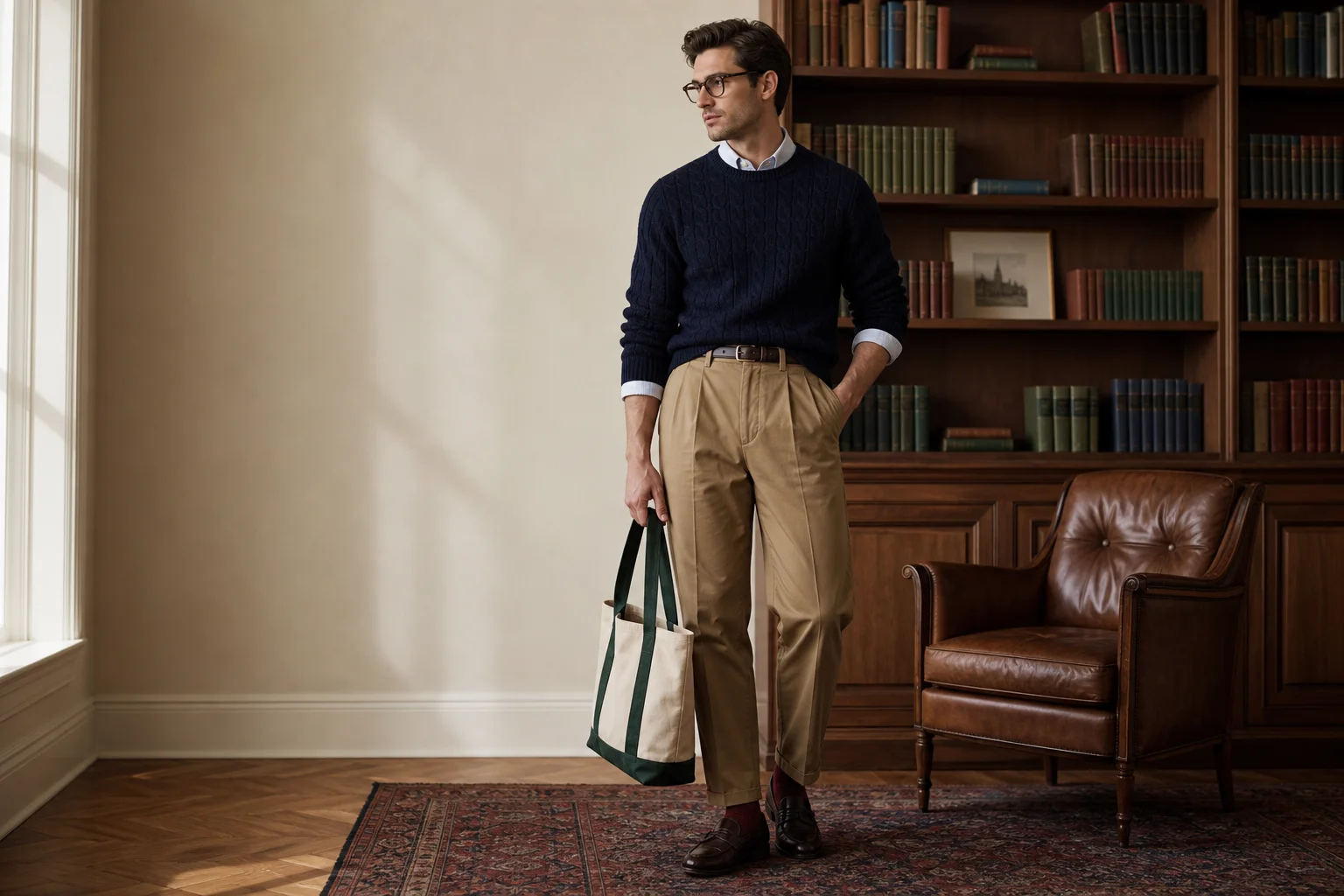
80s preppy fashion is a style system built from collegiate and heritage references. Its recognizable pieces include button-down shirts, rugby tops, Shetland or cable-knit sweaters, pleated trousers, loafers, penny loafers, blazers, striped ties, and practical outerwear. The visual identity comes from how these pieces are combined rather than from any single garment.
The decade introduced a stronger contrast between relaxed and tailored elements. A loose cable-knit sweater could sit over a crisp shirt. Straight chinos could be worn with a varsity-inspired jacket. A traditional blazer could be softened with denim or a plain knit. These contrasts make the style adaptable, which is why its best ideas still work in a modern wardrobe.
The term is also associated with a recognizable social image, so avoid treating it as a strict historical costume. The useful lesson is the construction of the outfit: controlled color, clear layers, familiar fabrics, and enough ease to let the wearer move naturally. For a broader foundation, begin with our minimalist wardrobe essentials and add preppy details selectively.
The Core Color Palette
Color is the fastest way to make 80s preppy fashion look intentional. Start with a quiet base of navy, cream, white, stone, camel, grey, and olive. These shades create combinations that remain easy to repeat. Add burgundy, forest green, mustard, or muted red as accents rather than using every heritage color in the same outfit.
The goal is visual rhythm. A dark layer near the face, a pale middle layer, and a medium-tone trouser often create enough contrast without looking loud. If the outfit includes a strong pattern, keep the remaining pieces solid. If the trousers are pleated or generously cut, choose a cleaner top layer to preserve balance.
Five Garments That Build the Look
1. The Oxford Shirt
The oxford shirt is the structural base of 80s preppy fashion. Look for a collar with enough roll to sit naturally under a sweater, a shoulder seam that follows your body, and a fabric with visible texture. White and pale blue are the most versatile colors. Wear it tucked into tailored trousers, left untucked under a cardigan, or layered beneath a rugby shirt.
Avoid a shirt that is extremely slim. A little ease creates the relaxed proportion associated with the decade and prevents the collar from collapsing under knitwear.
2. The Textured Knit
Cable knits, Shetland wool, lambswool, and cotton fisherman sweaters provide the surface interest that keeps a simple outfit from looking flat. A textured sweater can replace a logo as the main visual feature. Our Shetland wool cable-knit sweater durability guide explains why yarn quality, knitting density, and seam construction matter more than a decorative label.
3. Chinos and Pleated Trousers
Chinos are the everyday workhorse. A medium-rise pair in stone, khaki, olive, or navy can support nearly every preppy top layer. For a stronger 80s reference, try a single pleat and a straight leg. The fit should skim the body without gripping the thigh or ballooning at the ankle.
Fabric weight matters. A heavier twill holds its shape and develops convincing texture. If you prefer denim, use a clean dark pair with minimal distressing; our Japanese raw selvedge denim patina guide provides a useful buying framework.
4. Loafers and Simple Leather Shoes
A leather loafer anchors the outfit. Penny loafers, tassel loafers, and plain derbies all work when the shape is streamlined and the leather is substantial enough to hold its form. Brown, dark burgundy, and black cover most situations.
5. A Practical Jacket
Finish the wardrobe with one jacket that can handle changing weather. A navy blazer is the formal option. A waxed cotton jacket, chore coat, field jacket, or varsity-inspired wool jacket offers a more casual interpretation. The best outer layer has enough room for a knit beneath it and enough structure to keep the outfit from collapsing.
How to Build an 80s Preppy Fashion Outfit
Start with one anchor piece. That might be a cable-knit sweater, a navy blazer, a striped rugby shirt, or a pair of pleated chinos. Add one clean supporting layer and one piece with a different texture. A reliable formula is:
- Oxford shirt in white or pale blue.
- Textured knit in navy, forest green, or burgundy.
- Straight chinos or dark denim.
- Brown loafers or simple derbies.
- One practical jacket if the temperature requires it.
This formula works because each piece performs a separate visual job. The shirt provides a crisp edge. The sweater adds depth. The trousers establish proportion. The shoes ground the colors. The jacket gives the outfit a clear finish.
For a more relaxed version, replace the oxford shirt with a plain tee and the blazer with a cotton overshirt. For a dressier version, keep the shirt and trousers, add a fine-gauge cardigan, and use polished loafers. The underlying structure stays the same, so the wardrobe remains coherent.
How to Avoid Looking Like You Are Wearing a Costume
The main risk with 80s preppy fashion is stacking too many references. A rugby shirt, striped tie, lettered sweater, penny loafers, pleated trousers, and a heavily patterned scarf can make the outfit look theatrical. Choose two or three preppy signals and let the rest remain quiet.
Brand repetition is another problem. Large logos tend to date the outfit faster than color or fabric. A plain navy knit with excellent texture usually communicates more confidence than a sweater covered in graphics. The same principle applies to accessories. A simple leather belt, a practical canvas tote, and a restrained watch are enough.
Fit is more important than historical accuracy. The shoulder line should be clean, the rise should feel comfortable when sitting, and the trousers should fall smoothly over the shoe. If an old photograph inspires you, borrow its balance rather than copying every measurement.
Seasonal Ways to Wear the Style
In spring, use a cotton oxford shirt, lightweight cardigan, straight chinos, and canvas sneakers or loafers. Keep the palette pale with navy or forest green as the anchor.
In summer, choose seersucker, linen-cotton blends, or a short-sleeve knit polo. In autumn, combine a Shetland sweater with corduroy or heavier chinos, then add a field jacket or wool blazer. Our high-twist tropical wool suiting stress test offers a useful fabric reference for tailored trousers.
In winter, use a dense sweater, flannel shirt, wool overcoat, and sturdy leather footwear. See our bespoke cashmere overcoat longevity benchmarks before buying a major outer layer.
Shopping Checklist for a Better Wardrobe
Before buying, ask five questions:
- Does the garment create at least three outfits with pieces you already own?
- Is the fabric appropriate for the season and the amount of wear you expect?
- Does the shoulder, rise, sleeve, or trouser break need tailoring?
- Are the buttons, seams, lining, and hardware appropriate for the price?
- Would the piece still look useful without its label or trend association?
These questions turn 80s preppy fashion into a wardrobe method. If you already own a navy sweater, the next purchase may be a pale blue shirt, textured trouser, or practical jacket rather than another navy sweater.
FAQ: 80s Preppy Fashion Today
Is 80s preppy fashion still wearable in 2026?
Yes. Use the decade as a reference for proportion, layering, and fabric, then keep the outfit restrained.
What is the easiest entry point?
Start with an oxford shirt, straight chinos, and a textured crewneck sweater.
Does preppy fashion require expensive brands?
No. Construction, fabric hand, fit, and repairability matter more than the label.
Can the style work for a casual office?
Yes. Use dark denim or chinos, a knit polo or oxford shirt, and a clean cardigan or overshirt.
How many colors should one outfit contain?
Three main colors are a dependable limit. A fourth can appear as a small accent.
80s preppy fashion works when it creates clarity. Build around durable fabrics, measured color, and proportions that suit your body and daily routine. The style becomes modern when it serves your life rather than demanding that you recreate a decade exactly.