Budget appliances can be excellent purchases when the decision is based on the job, the installation, and the lifetime cost. A low sticker price alone is not a buying strategy. The cheapest machine can become expensive when it consumes more energy, needs proprietary parts, or fails shortly after its warranty ends.
This guide turns budget appliances into a practical comparison rather than a race to the lowest sale price. It explains which specifications deserve attention, where a lower price is harmless, where it creates risk, and how to build a short list that will still make sense after several years of use. For broader household technology planning, the Last Meadow electronics department provides related equipment reviews and buying frameworks.
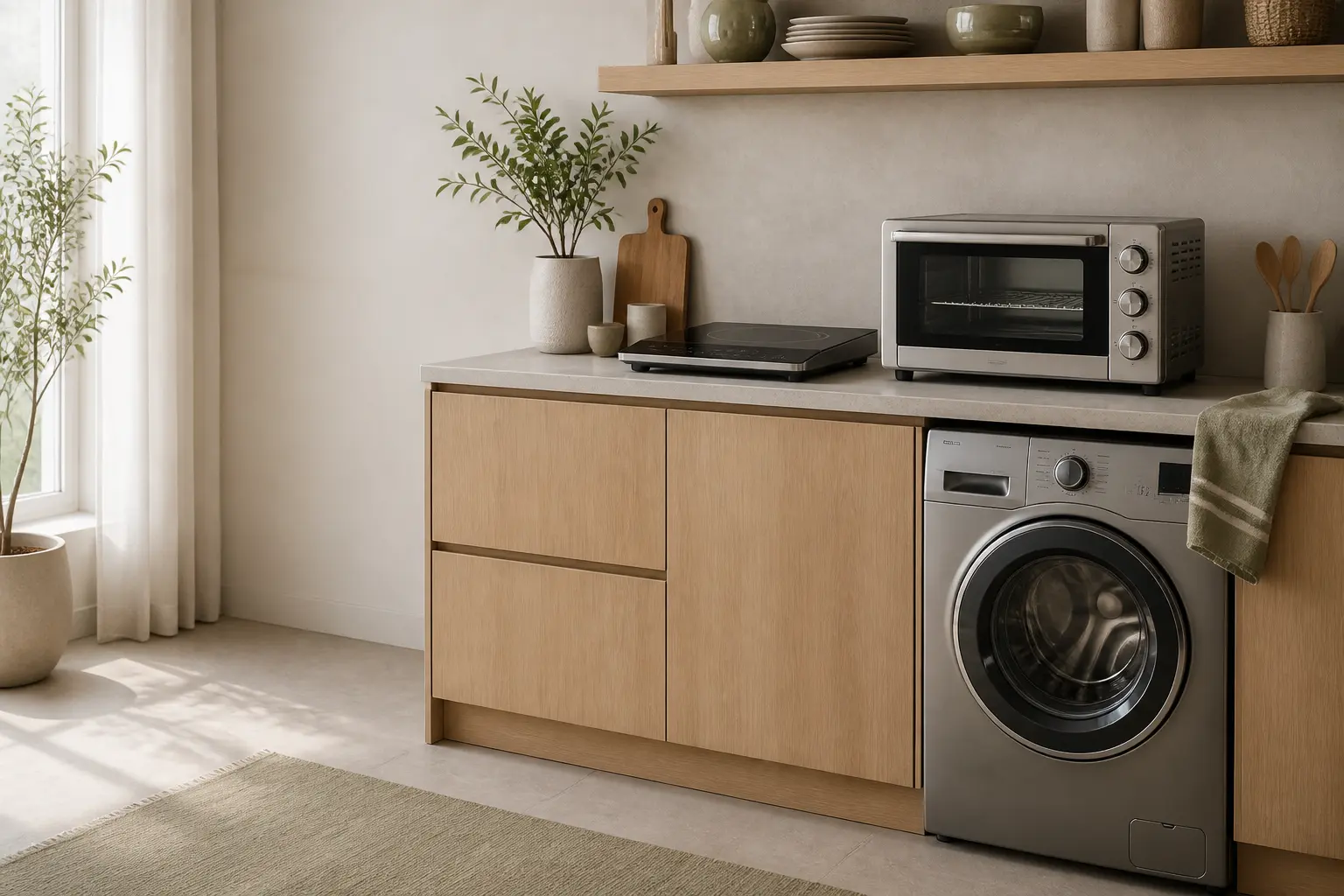
What Budget Appliances Really Mean
Budget appliances occupy the value segment between disposable products and premium models loaded with features you may never use. They are designed to perform a defined household task at a controlled initial price. The strongest examples make sensible compromises: a simpler control panel, a standard finish, fewer connected features, or a smaller capacity. They preserve the essentials that affect safety, performance, maintenance, and daily convenience.
The weakest examples cut cost in places that are difficult to see. Thin insulation, noisy motors, fragile hinges, non-serviceable electronics, and unusual replacement parts can create long-term frustration.
Start with Total Cost, Not the Sticker Price
Write down the full cost before comparing two models. The purchase price is only the first line. A simple comparison should include:
- Purchase price, delivery, installation, and removal of the old unit.
- Electricity, gas, or water use over a normal year.
- Required accessories such as hoses, vents, filters, racks, or compatible cookware.
- Expected maintenance and the availability of replacement parts.
- Warranty length, exclusions, labor coverage, and service distance.
- The likely cost of replacing the appliance if a major component fails.
This approach changes the ranking. A slightly more expensive washer with a better motor warranty may be cheaper over five years than a bargain model with an unrepairable control board. An induction cooktop that uses less energy can justify its price when it replaces frequent oven use. For equipment that protects sensitive electronics in the same home, our guide to pure sine wave uninterruptible power supplies explains why electrical compatibility deserves its own budget.
Define the Job Before You Choose a Model
Every appliance should have a clear job statement. “I need a refrigerator” is too broad. “I need a refrigerator that fits a 34-inch opening, handles weekly meal preparation, and keeps energy use predictable” is actionable. The same principle applies to ovens, dishwashers, washers, dryers, air conditioners, microwaves, and countertop tools.
Measure the physical space first. Record width, depth, height, door swing, ventilation clearance, outlet position, drain location, and the route from the entrance to the installation point. Many disappointing budget appliances are technically functional but physically wrong for the room. A cabinet that blocks a door or a dryer that cannot vent safely is an expensive mistake regardless of the sale price.
Then describe usage. A single person cooking twice a week needs different capacity from a family preparing several meals each day. Capacity should match real habits, not an imagined future household.
Five Specifications That Protect a Small Budget
1. Capacity and usable layout
Look beyond the headline capacity. Interior shape, shelf adjustment, drawer access, rack design, and door clearance determine how much of the space is genuinely useful. A smaller appliance with a practical layout can outperform a larger model filled with awkward corners.
2. Energy and water consumption
Check the official energy label, annual consumption estimate, and the conditions behind the number. A lower-cost appliance with efficient insulation, a variable-speed motor, or sensible standby behavior may repay the difference over time. The ENERGY STAR product directory is a useful reference for comparing certified models and learning which categories have meaningful efficiency labels.
3. Controls and essential functions
Choose the controls you will actually use. Mechanical dials can be easy to understand and inexpensive to replace. Digital controls can offer precision and useful diagnostics, but additional screens, wireless modules, and touch surfaces introduce more failure points. Smart features can be valuable when they solve a real problem, such as notifying you that a cycle has finished. They do not automatically improve cleaning, cooling, or cooking performance.
4. Repairability and parts access
Search the model number with terms such as replacement filter, door seal, heating element, belt, pump, or control board. If no parts information appears, treat that as a warning. Ask whether local technicians service the brand and whether common wear items are available without a long special order. The best budget appliances are understandable enough to maintain.
5. Warranty and service terms
Read the warranty before assuming it offers meaningful protection. Separate parts coverage from labor coverage. Check whether a sealed system, compressor, motor, glass panel, or electronic board has different terms. Save the receipt, serial number, and installation record. The Federal Trade Commission warranty guide explains why written warranty terms matter and what buyers should look for.
Where to Save and Where to Spend
Save on cosmetic finishes, built-in screens, voice assistants, decorative handles, and duplicate automatic programs. A standard white or stainless finish can lower cost without changing the core job. A simpler microwave with physical controls may be more dependable than a premium model whose main advantage is a large display.
Spend on components that experience repeated stress. Prioritize a strong door hinge, a stable rack or shelf system, a quiet and efficient motor, adequate insulation, a dependable gasket, and accessible filters. For products connected to the home electrical system, installation quality and ventilation can matter more than a few extra cooking modes. Our circadian desk lighting guide offers a related example of how driver quality and thermal management affect long-term household equipment performance.
Budget Appliances by Category
For countertop cooking, compare temperature stability, usable interior dimensions, cleaning access, and ventilation clearance. For laundry, focus on load size, cycle duration, noise, water extraction, filter access, and replacement seal cost. A cheap dryer with a complicated vent path may increase both installation cost and operating expense.
For refrigeration, prioritize temperature consistency, door sealing, shelf flexibility, and replacement-bin availability. For dishwashers, inspect rack geometry, filter cleaning, pump access, and local service support. With small appliances, one well-built multi-use tool can be better value than several single-purpose devices.
How to Compare Online Listings Without Getting Misled
Create a short list of three to five models. Copy the exact model numbers into a comparison note and record dimensions, energy use, warranty, service terms, included accessories, and current price. Do not compare a base model with a retailer-exclusive variant until you confirm that the internal specifications are actually different.
Read negative reviews for patterns rather than isolated complaints. Repeated reports of leaking seals, failed displays, noisy bearings, missing parts, or poor customer service deserve attention. Check whether recent reviews describe the same product revision.
Check the return policy before delivery. Large appliances can be difficult and expensive to return after installation. Photograph the packaging, model label, and condition at arrival.
Common Budget Buying Mistakes
The first mistake is buying for a rare scenario. A household may pay for oversized capacity that consumes more space and energy every day. The second is ignoring installation. A low-priced range hood, washer, or dryer can become expensive when electrical work, plumbing changes, or vent modifications are required.
The third mistake is treating a high review score as a technical test. Reviews reveal convenience and failure patterns, but they rarely measure energy use, temperature stability, noise, or parts availability. Combine user feedback with the manual, technical sheet, warranty, and local service information.
The fourth mistake is buying too many connected products. Wi-Fi is useful only when notifications, monitoring, or remote control solve a recurring problem; it does not replace strong core hardware.
A Practical Final Checklist
Before purchasing budget appliances, confirm five things: the appliance fits the space, the capacity matches actual use, the annual operating cost is acceptable, common repairs are possible, and the warranty terms are clear. Then verify the return policy and installation requirements.
The goal is not to buy the cheapest machine in a category. The goal is to buy the least expensive appliance that performs its job reliably, efficiently, and safely. That distinction is what turns budget appliances into durable household infrastructure.
FAQ About Budget Appliances
Are budget appliances worth buying?
Yes, when the model has sensible construction, available parts, clear warranty terms, and a capacity that matches your routine. Low price alone is not enough.
What should I check first?
Measure the installation space, define the appliance's main job, and calculate the total cost of ownership before comparing features.
Is a refurbished appliance a good option?
It can be. Prefer professionally refurbished units with a written warranty, verified model numbers, documented testing, and available replacement parts. Avoid units with unknown water damage or missing safety components.
Do smart appliances save money?
Smart features can improve monitoring and convenience, but they do not automatically reduce operating cost. Evaluate the core motor, insulation, heating system, controls, and service terms first.
How long should a budget appliance last?
Service life varies by category, usage, installation, and maintenance. Use warranty and parts support as evidence of the manufacturer's support plan, then maintain filters, seals, vents, and moving parts according to the manual.