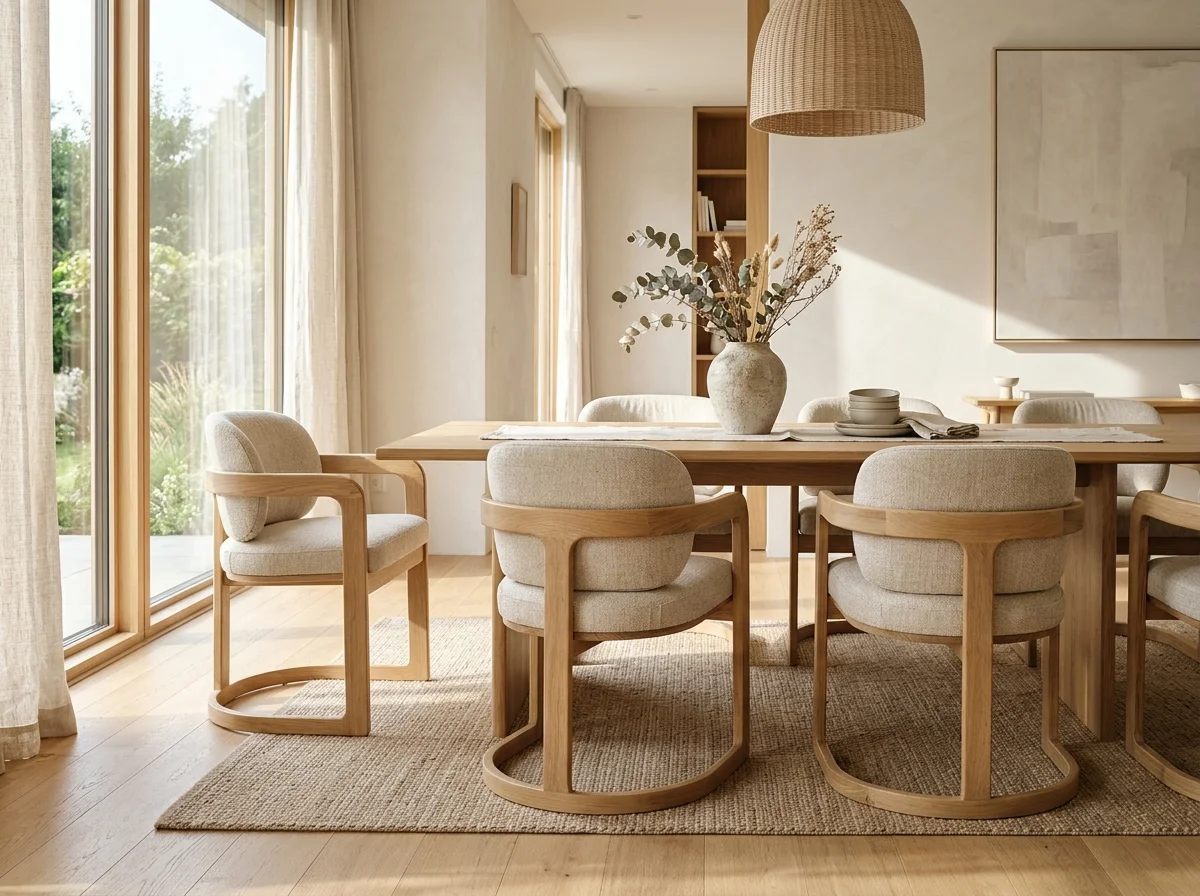
In modern residential architecture and communal living, the dining table has evolved beyond a quick meal surface into a multifunctional hub for lingering multi-course dinner parties, remote laptop work, and vibrant family conversations. When hosting extended gatherings, few interior oversights create more tangible discomfort than cramped, narrow seating. Standard mass-market seating often measures a meager 16 to 18 inches across, restricting movement and causing hip fatigue after barely an hour. Choosing wide dining chairs—typically offering a generous 20 to 24 inches of continuous seat width—transforms dining spaces into welcoming, lounge-caliber environments where guests naturally linger in complete ergonomic ease.
Yet incorporating dining chairs wide into a residential floor plan requires deliberate spatial planning. A broader seat footprint fundamentally alters room circulation, table apron clearance, and chair count along the perimeter of your table. Without careful dimensional calculations, generous armchairs can collide with table legs or crowd adjoining diners. This guide examines the essential engineering and aesthetic variables of wide seat dining chairs, helping you balance generous comfort with balanced dining room proportions. To explore coordinating spatial layouts and case storage, browse our Last Meadow home department and related guide on bedroom dresser modern design.
Defining the Dimensional Standards of dining chairs wide
The primary distinction between conventional dining seats and dining chairs wide lies in anatomical clearance and weight distribution. In standard furniture manufacturing, mass-market chairs restrict seat widths to 17 inches to maximize container shipping density. In contrast, authentic generously proportioned dining seats provide a minimum of 20 inches of unencumbered horizontal sitting width, with premium lounge-dining hybrid models extending up to 22 or 24 inches.
When evaluating dining chairs wide, consider three interrelated dimensional ratios:
- Seat Width: Measured across the widest usable sitting plane. High-end wide modern dining chairs maintain their breadth throughout the rear seat basin, ensuring that individuals of diverse body frames or those who shift sitting posture during meals enjoy unrestricted support.
- Seat Depth: Generous width must be balanced with proportionate depth (ideally 19 to 21 inches). If seat depth is excessive, the front waterfall edge compresses the popliteal crease behind the knees; if too shallow, the pelvis lacks foundational femur support.
- Overall Silhouette Width: Be aware that side armrests or flared architectural legs expand the total exterior footprint. While the interior cushion of dining chairs wide might measure 21 inches, integrated wraparound arms can extend overall chair width to 24 or 26 inches.
Understanding these precise dimensional distinctions prevents spatial overcrowding while guaranteeing superior relaxation.
Calculating Table Perimeter Clearance and Diner Spacing
The most common installation error with dining chairs wide is attempting to squeeze the same number of seats around a table previously occupied by compact side chairs. Every seated diner requires an ergonomic envelope that accounts for elbow splay, cutlery handling, and effortless egress.
To integrate broad dining chairs successfully, adhere to the 28-to-30-inch perimeter rule. While standard side chairs function with 24 inches of table edge per person, dining chairs wide demand at least 28 to 32 inches of linear perimeter space per seating position. For example, a standard 72-inch rectangular dining table comfortably accommodates three compact chairs per side, but will comfortably seat only two dining chairs wide between the table trestles without uncomfortable elbow contact.
Furthermore, verify the lateral clearance between table legs. When pairing extra-wide dining seating with four-legged dining tables, measure the clear distance between the interior face of the table legs rather than the outer tabletop dimension. If the table legs are set inward or feature diagonal corner braces, ensure that pairs of dining chairs wide can push fully beneath the tabletop when not in use, preserving essential pedestrian walkways in open-concept dining rooms.
Structural Frame Joinery: Solid Hardwood versus Tubular Steel
Because generous dining chairs accommodate greater dynamic body weight and wider leverage angles across their seat rails, internal frame joinery must withstand rigorous torsional stress. Lightweight particleboard or stapled pine frames will quickly loosen, creak, and destabilize under regular family use.
When investing in wooden dining chairs wide, seek kiln-dried solid hardwoods such as American white oak, European ash, black walnut, or hard maple. Inspect the underside joinery where the legs connect to the primary seat apron:
- Mortise and Tenon Joints: The gold standard of wooden chair manufacturing. Deep mortise and tenon joinery wedged with solid timber pins resists cyclical racking forces far better than simple dowels.
- Corner Block Reinforcement: High-quality dining chairs wide incorporate heavy solid hardwood triangular corner blocks secured with both structural wood glue and steel lag bolts to prevent corner spreading.
- Welded Steel Sub-Frames: For contemporary industrial or minimalist profiles, solid steel or tubular aluminum frames provide exceptional structural rigidity. Ensure all tube intersections feature full 360-degree continuous TIG welds rather than spot welds, guaranteeing that wide-base dining chairs support dynamic loads exceeding 300 pounds in accordance with BIFMA commercial seating standards.
Ergonomic Lumbar Contouring and Cushion Density
A broad seat alone does not guarantee long-term dining comfort; poorly cushioned dining chairs wide can induce spinal slouching if anatomical lumbar support is neglected. High-performance dining seating incorporates subtle curved backrest planes and dual-density foam cores that support healthy posture across prolonged meals.
Seek backrests with intentional lumbar curvature that follows the natural lordotic curve of the lower spine. A slightly reclined backrest angle (between 100 and 105 degrees relative to the seat) relieves pelvic pressure, whereas rigid 90-degree upright backs induce muscular fatigue. For barrel-back or curved tub silhouettes, the wrap-around backrest of dining chairs wide gently cradles the thoracic spine, creating a cocoon-like seating sensation.
Underneath the upholstery, inspect the cushion construction. Cheap low-density foam (under 1.8 lbs/cu ft) collapses permanently within months, leaving seated guests resting on unyielding plywood. Exceptional spacious dining seating utilize high-resiliency (HR) molded polyurethane foam with a minimum density rating of 2.5 to 2.8 lbs/cu ft, paired with internal Pirelli webbing or sinuous steel springs. This construction provides immediate initial softness while retaining resilient bounce-back memory across decades of daily dining.
Upholstery Textiles: Performance Weaves, Top-Grain Leather, and Linen Blends
The expanded surface area of dining chairs wide puts upholstery fabrics prominently on display, making textile resilience, stain resistance, and tactile comfort paramount. Because dining chairs are continually exposed to food spills, beverage splashes, and fabric friction, selecting an appropriate textile decides long-term satisfaction.
- High-Performance Polyester and Olefin Weaves: Engineered performance textiles (such as Crypton or Sunbrella indoor lines) provide unmatched stain resistance. Utilizing liquid-barrier fiber coatings, these fabrics prevent red wine, coffee, and cooking oils from penetrating the foam core, allowing dining chairs wide to maintain pristine aesthetics in active family homes.
- Top-Grain Aniline and Semi-Aniline Leather: Leather represents the most timeless, easy-to-clean covering for wide dining armchairs. High-grade top-grain leather breathes naturally, conforms to body heat, and wipes clean effortlessly with a damp cloth. Over years of celebratory meals, genuine leather develops a rich, organic patina that enhances the authentic luxury of the dining suite.
- Belgian Linen and Textured Bouclé: For understated Scandinavian and Japandi dining spaces, heavy-weight linen blends and textured wool bouclé impart tactile warmth. When opting for natural woven fibers on dining chairs wide, ensure the fabric undergoes a heavy-use Martindale rub test rating of at least 30,000 double rubs to prevent premature pilling and seam slippage along the front seat edge.
Armchair versus Side Chair Proportions: Armrest and Apron Clearance
Deciding between armless side chairs and fully equipped armchairs is a central consideration when shopping for wide cushioned dining chairs. While armless wide chairs offer fluid side egress and tuck effortlessly beneath low tables, wide armchairs provide superior upper-body relaxation during formal multi-course dinners.
Before committing to armed dining chairs wide, meticulously calculate vertical armrest clearance:
- Table Apron Clearance: Measure the vertical distance from the floor to the lowest underside of the dining table apron or tabletop support rail.
- Armrest Height: Ensure the top edge of the chair's armrests sits at least 1 to 1.5 inches below the table apron. If the armrests cannot glide freely beneath the table, the chairs will remain permanently extended into the room, restricting circulation and risking wood-on-wood collision damage.
- Hybrid Host Layouts: In narrow dining rooms where full sets of wide armchairs would impede side pathways, consider styling wide ergonomic dining chairs as prominent 'host chairs' at the two table heads, complemented by armless dining chairs wide along the lateral sides.
Long-Term Maintenance, Glides, and Archival Floor Care
The substantial footprint and weight of broad-seat dining chairs require intentional floor protection to prevent unsightly scratching across hardwood, polished concrete, or natural stone flooring. Never allow bare metal or plastic factory glides to make direct contact with residential floors.
Affix heavy-duty screw-in felt glides or commercial-grade nylon glides to the base of every chair leg. Adhesive stick-on felt pads frequently dislodge under the lateral sliding friction generated by heavier dining chairs wide; screw-in glides remain permanently centered and can easily be replaced once the felt fibers compress.
Periodically vacuum the seam crevices of upholstered wide timber dining chairs using a soft brush nozzle to remove microscopic food crumbs that accelerate fiber abrasion. For solid wood framework, apply an annual coat of natural paste wax or refined mineral oil in accordance with USDA wood maintenance guidelines, keeping the timber conditioned against dry winter radiator heating.
Definitive Buyer Checklist for dining chairs wide
Prior to completing your dining furniture acquisition, verify each prospective model against this rigorous editorial checklist:
- Clearance Verification: Confirm at least 28 inches of dedicated table perimeter per seat and 36 inches of pedestrian walkway behind pulled-out chairs.
- Armrest Height Check: Verify that armrests tuck completely beneath the table apron with a minimum 1-inch clearance buffer.
- Foam Density & Core: Confirm high-resiliency foam (2.5+ lbs/cu ft) supported by solid suspension webbing or heavy-gauge springs.
- Frame Joinery: Inspect for solid kiln-dried hardwood with glued mortise-and-tenon joints or continuous welded steel.
- Textile Rating: Ensure upholstery fabrics offer a minimum 30,000 Martindale rub count or cleanable top-grain leather.
- E-E-A-T Safety Adherence: Confirm product compliance with BIFMA X5.1 structural strength and tip-resistance standards.
By prioritizing anatomical seat width, robust joinery, and meticulous dimensional clearances, investing in generous width dining chairs ensures your dining room delivers generous hospitality, peerless comfort, and lasting architectural refinement.