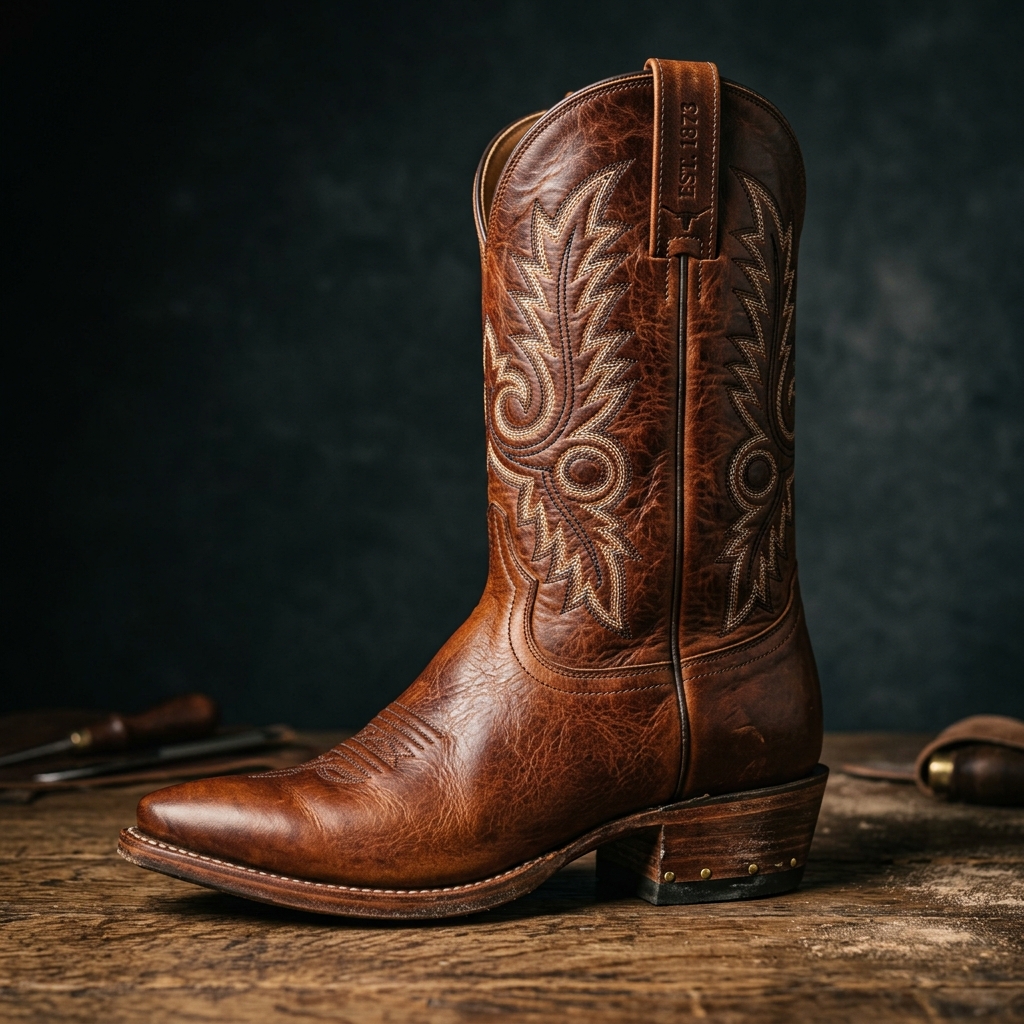
If you searched for a Rujo Boots review, you probably want more than a product photograph and a list of colorful leather options. You want to know what the construction terms mean, how the sizing guidance translates to your own feet, and what to check before paying for a pair of western boots online.
This guide takes that practical route. It uses the specifications and policies published on the official RUJO website, then translates them into a buying checklist. It does not present a personal wear test, invented customer story, or made-up rating. The goal is to help you decide whether a particular pair fits your wardrobe, your foot shape, and your expectations for maintenance.
This article contains affiliate links. If you purchase through a link on this page, Last Meadow Guide may earn a commission at no extra cost to you. Always confirm the current model details, availability, and policies on the retailer's site before ordering.
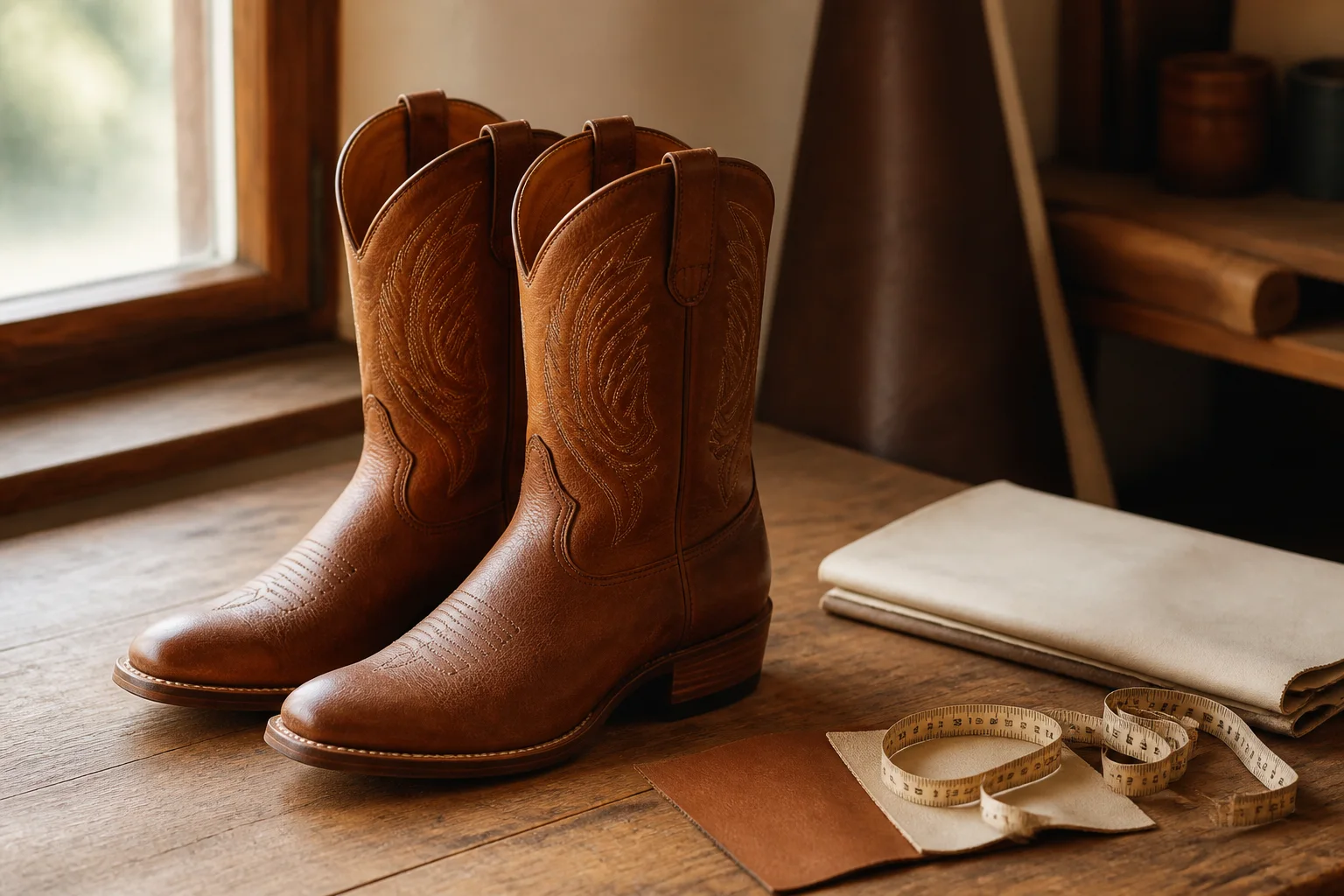 A practical western boot purchase starts with construction, fit, and the conditions attached to the order.
Rujo Boots review: the short answer
RUJO is worth a closer look for shoppers who want traditional western styling with construction details that are more substantial than a basic fashion boot. The official shop currently lists Goodyear welt construction, genuine hides and skins, calfskin leather lining, hand-hammered lemonwood pegs, hand-hammered brass nails, replaceable cowhide leather outsoles, replaceable leather stacked heels, and a rubber heel cap among its construction features. Those are meaningful specifications because they describe how the boot is assembled and how certain wear components may be maintained.
They still need to be evaluated at the individual model level. Leather type, toe shape, shaft design, color, price, and availability vary across the collection. A construction method can improve repairability and structure, but it cannot decide whether a boot is comfortable for your instep or appropriate for your daily use.
For a broader explanation of western boot construction, see this Goodyear-welted footwear guide. The rest of this review focuses on the decisions that matter when choosing a RUJO pair.
What the construction terms actually tell you
Goodyear welt construction
A Goodyear welt is a strip that joins the upper, insole structure, and outsole through a stitched construction. Its principal buying advantage is serviceability. When the outsole wears, a qualified cobbler can often remove and replace the outsole while preserving the upper. That does not mean every future repair is automatic or inexpensive. The condition of the welt, upper, insole, and heel must be assessed when the time comes.
The useful question is therefore not simply, “Is this boot Goodyear welted?” Ask which parts are replaceable, whether the model uses a visible welt, and whether a local repair shop is willing to service that type of boot. RUJO's official shop page lists Goodyear welt construction as a collection feature. Check the specific product page for the pair you are considering.
Other construction details
Hand-hammered lemonwood pegs and brass nails are traditional details that help describe how the sole and upper are secured. RUJO also lists calfskin leather lining, a replaceable cowhide leather outsole, a replaceable leather stacked heel, and a rubber heel cap. Together, these features point to a boot designed with a serviceable sole and a considered interior, though they do not guarantee comfort or longevity on their own.
Before ordering, inspect the product photos for the sole edge, heel profile, and toe shape. If you plan to wear the boots in wet conditions, ask how the chosen leather and sole should be cared for. Leather construction supports maintenance. It does not make a boot waterproof by default.
Choosing between men's and women's styles
The official men's collection includes traditional western silhouettes and a range of leather and toe profiles. The women's collection includes cowgirl boots and shorter bootie silhouettes. The right category depends on the shape, shaft height, and styling you want, not only on the label attached to the collection.
Use the product page to compare shaft height, toe profile, leather or skin, heel shape, and sole material. Those details affect calf coverage, forefoot room, care needs, stability, styling, traction, and future replacement options.
If you already own western boots, compare the new pair with the best-fitting pair in your closet. Note the toe shape, shaft circumference, heel height, and whether you prefer a close or relaxed instep. This comparison is more useful than choosing based on color alone.
Rujo Boots sizing: what to check before ordering
Sizing is the highest-risk part of an online boot purchase. RUJO's official size guide says the boots fit true to standard US sizes and recommends ordering the same size as your dress shoes. It also provides width guidance: shoppers who need an E width or wider should choose an EE size, while those with a B width or narrower should choose a D size one size smaller than their normal size. The guide states that an exchange can be arranged when the boots do not fit, with a return shipping label included.
Treat that as the starting framework, then check your own measurements. Measure both feet at the end of the day while wearing the socks you expect to use. Record the longer foot and the wider foot. If you are between sizes, have a pronounced instep, or have previously needed wide footwear, contact the retailer before placing an order.
When a pull-on western boot is put on, the heel may lift slightly at first. The foot should settle into the heel pocket as the boot breaks in. Excessive heel movement, cramped toes, numbness, or pressure concentrated on one point are signs to take seriously. Do not assume that painful pressure will disappear simply because the boot is made of leather.
A simple model-by-model buying checklist
Use this checklist on the exact RUJO model you are considering:
- Confirm the last and toe shape. A pointed toe will feel different from a round or square toe even at the same nominal size.
- Read the leather description. “Genuine hides and skins” covers a broad category. Identify whether the model uses cowhide, an exotic skin, or a combination.
- Check the shaft dimensions. Compare the listed height and opening with your calf and with the trousers or dresses you plan to wear.
- Inspect the sole and heel. Look for the construction details described on the product page and decide whether the sole suits your floors, climate, and walking routine.
- Review the current exchange terms. Save the policy page and keep the packaging until the fit is confirmed.
- Calculate the real purchase cost. Include shipping, taxes, care products, and likely cobbler work. A versatile color and moderate toe shape are easier to evaluate than a highly specialized statement boot.
The existing Rujo Boots construction guide goes deeper into leather and welt terminology. Use it to understand the vocabulary, then return to the model page for the facts that apply to the exact pair in your cart.
Pricing, promotions, and return policy
Boot prices and inventory change, so use the current product page as the reference. RUJO's collections page currently states that sale, promotional, and discount purchases are not eligible for refunds and may be limited to exchanges or store credit. Read the current wording before using a coupon or buying a final-sale item.
For a first order, prioritize a model with a clear size reference, a style you can wear regularly, and terms you understand. The lowest displayed price is rarely the only relevant number.
Who should consider Rujo Boots?
RUJO is a logical candidate for shoppers who value western design, traditional construction details, leather interiors, and the possibility of future outsole or heel service. It may also suit someone who wants a pair that can move between casual denim, event dressing, and a more intentional country-western wardrobe.
You may want to pass if you need a lightweight sneaker-like feel, a guaranteed waterproof boot, an instant out-of-the-box fit, or a shoe that requires no care. The construction features listed by the brand are most useful to people willing to select carefully, follow sizing guidance, and maintain leather footwear.
FAQ
Are Rujo Boots good?
The official specifications make RUJO worth considering in the traditional western boot category. “Good” still depends on the exact model, fit, leather choice, use case, and current terms.
Do Rujo Boots fit true to size?
RUJO's official guide says to use your standard US dress-shoe size, with separate guidance for wider and narrower feet. Compare that guidance with your measured foot before ordering.
Can I return a discounted pair?
The official collections page currently says sale, promotional, and discount purchases are excluded from refunds and may qualify only for exchange or store credit. Verify the current policy before checkout.
Are Rujo Boots handmade?
The brand presents traditional hand-hammered construction details, including lemonwood pegs and brass nails. The official site should be treated as the source for the specific production description of each model. Avoid assuming that every step of every model is individually handmade.
Which leather should I choose?
Choose based on use and care tolerance. Cowhide is a versatile starting point. Exotic skins create a more distinctive surface and usually demand closer attention to conditioning and storage. The model page should identify the material and care requirements.
Final verdict
This Rujo Boots review supports a careful purchase, not a blind one. The official construction list gives the brand a credible reason to be on a western boot shortlist, while the real decision still comes down to the individual model, foot shape, leather, sole, and return terms.
If the specifications match your priorities, confirm the size guidance and current policy, then compare the available styles on the RUJO collection page before ordering.